




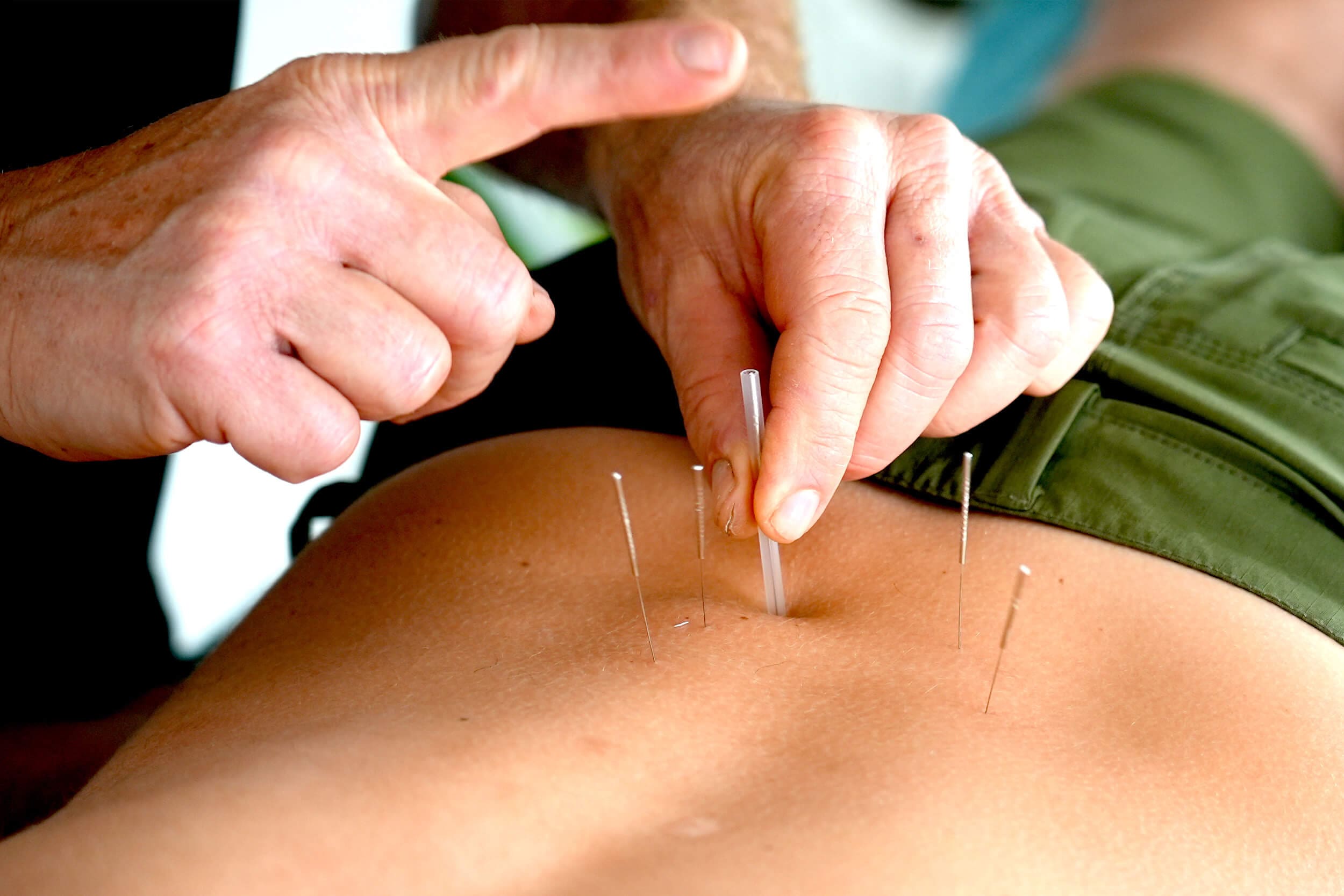
Dry Needling
Dry Needling treats a range of musculoskeletal concerns, including back pain, neck stiffness, shoulder tension, headaches, postural imbalances, scar tissue and muscle spasms. Combining Dry Needling with Manual Therapy ensures personalized care to relieve pain, improve function, and promote long-term wellbeing in Bonny Hills, Lake Cathie, and Laurieton.
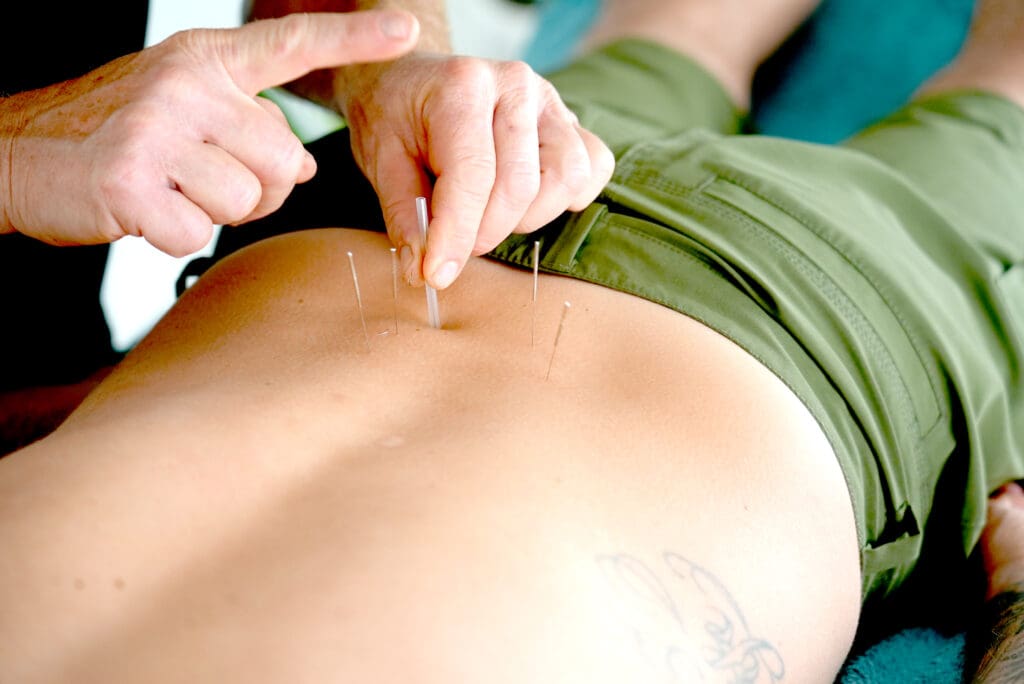
How does Dry Needling Work? What else can we solve with Dry Needling?
Pain Reduction is achieved by the insertion of fine, sterile needles into myofascial trigger points, taut bands, or areas of muscle hypertonicity to elicit a local twitch response. Responses are:
- Pain relief via reducing taught and tight bands
- Improves range of movement by tissue extensibility
- Improves function & communication between the brain & muscle – a solution for motor amnesia
- Reduces Scar Tissue
- Increases Blood Flow & Inflammation Response to promote tissue healing
Muscle relaxation, de-spasm or reactivation
Pain relief via reducing taught and tight bands
Improves function & communication between the brain & muscle - a solution for motor amnesia
Improves function & communication between the brain & muscle - a solution for motor amnesia
Increases Blood Flow & Inflammation Response to promote tissue healing
Reduces Scar Tissue
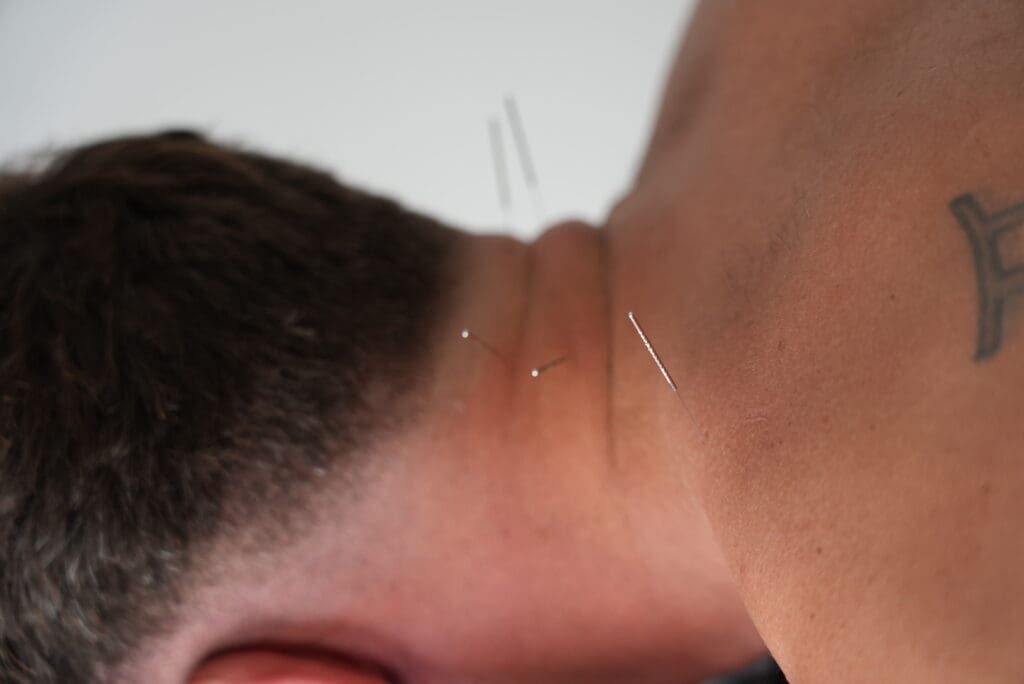
Does Dry Needling Hurt?
Dry Needling uses very thin needles and generally is not painful, a dull ache sensation may be felt as the tight bands of muscle contract and then release (known as a twitch).
Most common FAQ about Dry Needling
Yes, dry needling is considered very safe when performed by a qualified practitioner. The needles are sterile, single-use, and extremely fine, which reduces the risk of infection or complications. Side effects are generally mild and short-term, such as slight bruising, temporary soreness, or light fatigue. Serious side effects are extremely rare.
The number of sessions varies depending on your condition, pain level, and treatment goals. Some people experience noticeable relief after just one session, while others may require multiple treatments for lasting improvement. A personalised plan combining dry needling with manual therapy, stretching, and strengthening exercises is often best to achieve the best long-term results.
Dry needling is effective for a wide range of musculoskeletal conditions. Some of the most common include:
-
Neck and shoulder pain
-
Lower back pain and sciatica
-
Headaches and migraines
-
Sports injuries and muscle strains
-
Postural issues and repetitive strain injuries
-
Joint pain related to tight surrounding muscles
It’s often combined with manual therapy, stretching, or strengthening exercises for best results. By targeting the source of pain directly in the muscle, dry needling can help restore natural movement and speed up recovery.
How else can we help?
- Functional Strength Coaching
- Assisted Stretching
- Manual Therapy
- Sports Massage
- Remedial Massage
- Relaxation Lomi Lomi Massage
- TMJ pain treatment
- Head, Hands, Feet Massage
- Joint Mobilisation
- Power Yoga